Handling Class Imbalance Between Signal and Background
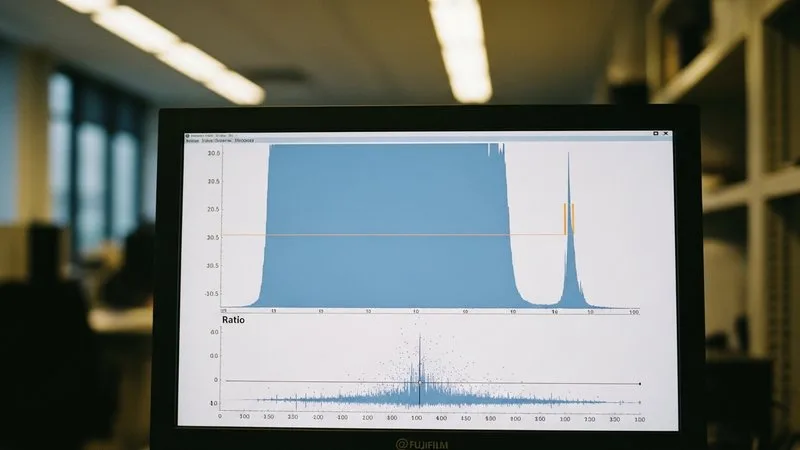
If you have ever trained a classifier on a realistic HEP dataset and watched it predict "background" for every single event — and still report a suspiciously good accuracy — you have already met the class imbalance problem. When signal is genuinely rare, a model that ignores it entirely can look fine by most naive metrics. This article walks through the practical fixes: class weights, resampling, and choosing evaluation metrics that actually tell you something useful.
Why Class Imbalance Machine Learning Problems Are Especially Sharp in HEP
In many fields, class imbalance means a ten-to-one ratio. In particle physics, it is often far worse. A new-physics signal might survive all selection cuts at a rate orders of magnitude below the dominant backgrounds. The signal background imbalance you encounter is not an accident of your data collection — it reflects the physics. Any solution has to respect that.
The core problem is that standard cross-entropy loss treats every event equally. If background events outnumber signal events by a large factor, the gradient updates during training are dominated by background. The model learns an excellent background description and essentially memorises "always predict background." Loss goes down, accuracy goes up, and you have learned nothing about the signal.
Fix 1: Class Weights
The simplest and most widely used tool is to assign a higher penalty to misclassifying the rare class. Most frameworks accept a class_weight argument directly in the loss function or the fit call. You set the weight for signal events to be proportionally larger than the weight for background events, so that a single signal misclassification costs as much in the loss as many background misclassifications. The model is then forced to pay attention to the minority class.
How to set the weights in practice
A natural starting point is to make the weighted number of signal events equal the weighted number of background events — this is sometimes called balanced weighting. You can also treat the weights as a hyperparameter and tune them on a validation set, watching the metric you actually care about (see below). If your training sample already carries physics event weights (from MC generators), combine them with the class imbalance weights multiplicatively so both effects are respected.
This is the lowest-friction fix for imbalanced classification. It requires no change to your dataset and plugs into essentially any framework.
Fix 2: Resampling
If class weights are not available or you want an alternative, you can modify the dataset itself.
Oversampling the signal
Duplicate (or synthesise) signal events so the training set is balanced. The simplest version copies existing signal events at random; more sophisticated methods interpolate between nearby events in feature space (SMOTE and its variants). Be careful: if you oversample before splitting into train and validation sets, identical events can appear in both, and you will overestimate performance.
Undersampling the background
Randomly discard background events until the classes are comparable in size. This is quick but wastes data. It works well when you have an enormous background sample and are willing to trade some statistical precision for speed.
In practice, class weights are usually preferred over resampling for HEP use cases because they use all available events and preserve the original distributions. Resampling becomes attractive when memory or compute is the bottleneck.
Fix 3: Use the Right Metric
Accuracy is nearly useless for imbalanced classification. A classifier that predicts background for every event achieves high accuracy when signal is rare — but it has zero signal efficiency, which is what you actually care about.
The metrics that matter in HEP are the ones you already know from detector performance:
- ROC curve and AUC: plots signal efficiency (true positive rate) against background rejection (one minus false positive rate). This is the standard in HEP for a reason — it is threshold-independent and directly maps to physics intuition.
- Signal efficiency at fixed background rejection: pick the working point your analysis needs and evaluate the classifier there.
- Approximate significance: proxy figures of merit like $S/\sqrt{B}$ evaluated on a held-out sample give you a physics-motivated sense of how much the classifier helps.
Avoid reporting accuracy or even balanced accuracy without also reporting your ROC curve. The curve tells the full story. If you want to go deeper on evaluation metrics and how to connect classifier output to analysis sensitivity, the complete HEP ML course covers this in detail with practical examples.
Putting It Together in Your Analysis
A practical recipe: start with class weights set to balance the effective sample sizes, train your model, and evaluate on a held-out set using the ROC curve and a physics figure of merit. If the ROC curve still looks flat at low background rejection — the regime you care about — try increasing the signal weight further or combining weights with mild oversampling. Always check that your validation set was not contaminated by oversampled duplicates. For more on building robust training pipelines, see the full course curriculum and the related guides on the free introductory module.
If you are also navigating correlated features or sculpting concerns, the signal background imbalance fix should be applied before you worry about those; get the classifier to see the signal first, then refine.
The one-line takeaway: when signal is rare, weight it heavily, evaluate with ROC curves instead of accuracy, and never let the loss function forget that rare events are the whole point.
Want to go deeper?
Machine Learning for High Energy Physics: The Complete Course takes you from first principles to a defensible result in 6 structured modules. $97, 30-day guarantee.
See the course →Not ready yet? Grab Module 1 free →