The ML for HEP library
Blog
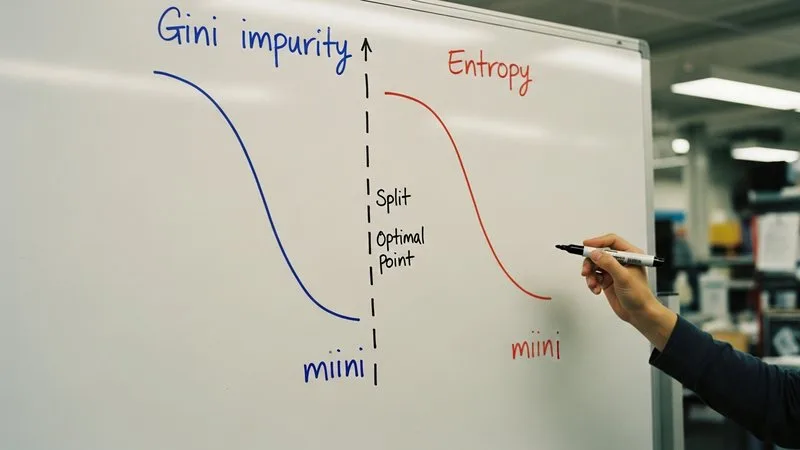
Gini Impurity vs Information Gain: Which Split Criterion Should You Use?
Decision trees split nodes by maximising purity. Gini impurity and information gain (entropy) are the two standard criteria. Here is what they measure, how they differ, and why the choice almost never matters in practice.

How to Detect Overtraining in a Boosted Decision Tree
Overtraining is the single most common failure mode in HEP classifiers. Learn the standard diagnostics: train-test overlay plots, the Kolmogorov-Smirnov test, and what to do when they fail.
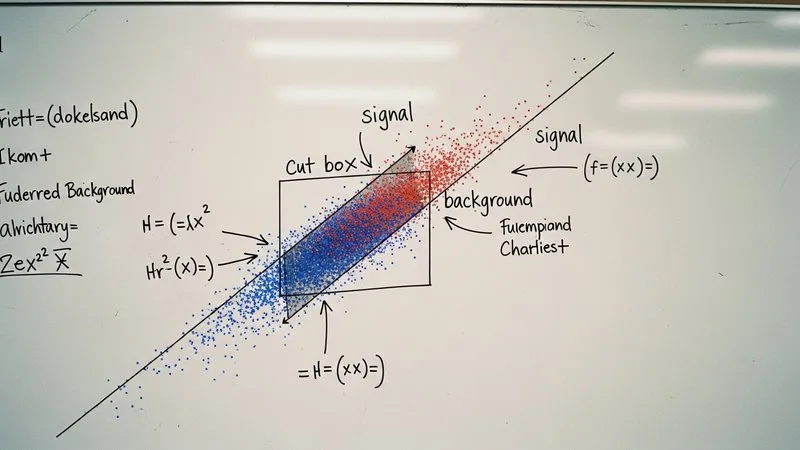
Why Rectangular Cuts Fail When Your Variables Are Correlated
Rectangular cuts force axis-aligned selection boundaries. When discriminating variables are correlated, signal lives along diagonals that boxes cannot follow. Here is why multivariate methods beat cuts — and exactly when they matter most.
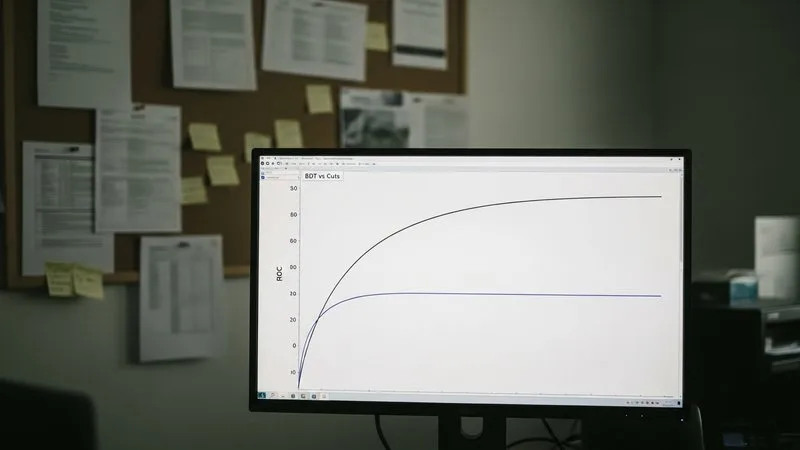
Watch a Boosted Decision Tree Beat Rectangular Cuts in One Plot
A short, runnable example: on a two-variable signal-vs-background problem, a boosted decision tree recovers signal that rectangular cuts throw away. Copy the code, run it, see the ROC gap yourself.

The HEP-ML Decoder: Every Machine-Learning Term, Translated Into Physics You Already Know
Machine learning has its own vocabulary, but most of it maps one-to-one onto concepts a particle physicist already owns. Features are observables, overtraining is overfitting a χ², ROC is efficiency vs purity. A translation table.